Oct 13, 2026
UV Lamp Filament Preheating and Ballast Startup Guide for OEM Buyers
Learn how UV lamp filament preheating, ballast startup method, pin wiring and switching cycles affect reliable OEM germicidal lamp operation.
For many low-pressure UV germicidal lamps, reliable starting depends on more than matching the printed wattage. The ballast must prepare the lamp electrodes correctly, apply the required starting conditions and then regulate current during normal operation. When the lamp and ballast use incompatible starting methods, the result may be delayed ignition, repeated flashing, darkened lamp ends or shortened service life.
This guide explains filament preheating and startup behavior for OEM equipment manufacturers, UV system assemblers, distributors and maintenance teams. It focuses on practical information buyers should confirm before approving a lamp and ballast combination.
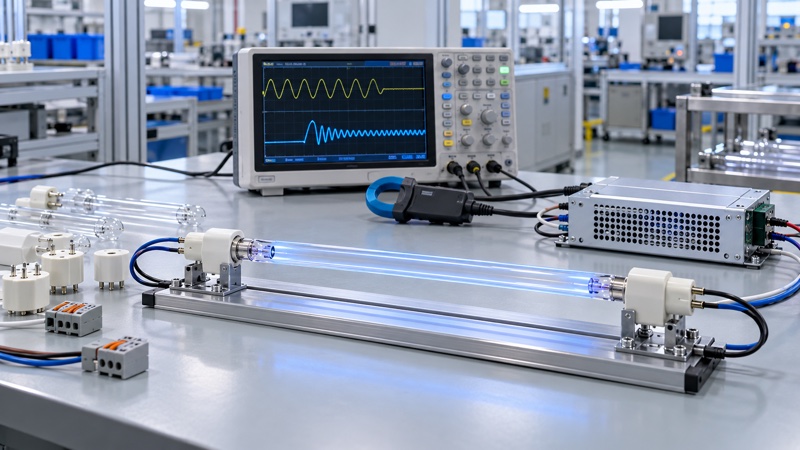
What Is UV Lamp Filament Preheating?
Many hot-cathode germicidal lamps contain electrode filaments at both ends of the tube. During a controlled preheat start, the ballast supplies energy to warm these electrodes before the main discharge is established through the lamp. The goal is to create stable starting conditions without excessive stress on the electrode coating.
Preheating is relevant to specific lamp and ballast designs. It should not be assumed that every UV lamp has a heated filament or that every electronic ballast uses the same startup sequence. Buyers selecting UV germicidal lamp tubes should confirm the lamp construction and approved operating circuit with the supplier.
Why the Startup Method Matters
A UV lamp may appear to start successfully while still being operated outside its intended electrical conditions. Repeated hard starts can consume electrode material, while insufficient starting conditions can cause flicker, multiple ignition attempts or failure to establish a stable discharge. These effects may become more visible in equipment with frequent switching.
For replacement work, the correct approach is to match the original lamp, wiring and UV electronic ballast as one electrical system. The fact that a ballast can light a lamp once does not prove long-term compatibility.
Common Starting Approaches
Preheat or programmed start
The ballast warms the electrodes for a controlled interval before ignition. The exact current, timing and transition sequence depend on the ballast design. This approach is often considered where switching frequency and electrode protection are important, but only the approved lamp-ballast combination should be used.
Rapid-start type operation
Some systems maintain electrode heating while applying conditions that establish the discharge. Terminology can vary among suppliers, so buyers should request an actual wiring diagram and electrical specification rather than relying only on a marketing name.
Instant-start operation
An instant-start circuit establishes the lamp discharge without a separate controlled preheat period. It may use a different lamp wiring arrangement and starting voltage. A lamp intended for a programmed-start circuit should not automatically be substituted into an instant-start system, especially when equipment cycles frequently.
These categories describe general behavior, not universal interchangeability rules. The UV lamp operating current and ballast compatibility guide provides additional checks for current, voltage and power matching.
How Pin Layout Relates to Filament Heating
Lamps with heated electrodes commonly require electrical access to both ends of each filament. This is one reason four-pin bases and multi-wire holders are found in many UV systems. However, pin count alone does not identify the correct circuit. Pin spacing, internal connections, base keying and ballast wiring must all be confirmed.
Never connect pins by visual guesswork. Compare the lamp drawing with the equipment schematic and inspect the holder. BIOSUN’s guide to UV lamp base types and pin layouts explains the mechanical checks, while UV lamp holders and accessories should be selected for the approved base and wiring arrangement.
Information to Request From the Lamp Supplier
Before sample approval, an OEM buyer should obtain enough information to define the operating system. A useful technical request includes:
- Lamp model, rated power and nominal operating current
- Lamp voltage under stable operating conditions
- Electrode or filament connection diagram
- Recommended starting method
- Compatible ballast model or required ballast output characteristics
- Base type, pin layout and holder requirements
- Expected warm-up behavior and monitoring logic
- Permitted switching frequency or duty-cycle guidance
- Ambient or lamp-wall temperature conditions used for validation
For replacement orders, send photographs of the old lamp marking, both bases, ballast label, wiring and equipment model. The replacement UVC lamp range can then be narrowed by mechanical and electrical evidence rather than wattage alone.
OEM Startup Sequence Design
Define the power-on sequence
The equipment controller should give the ballast the stable supply and control signals it requires. If relays, dimming inputs, interlocks or sensors change state during ignition, document the sequence so that every production unit starts the same way.
Allow for lamp stabilization
Lighting is not the same as reaching stable germicidal output. Control logic may need a delay before enabling full process flow or declaring the disinfection stage ready. The required delay depends on lamp type, ballast, temperature and application validation.
Handle failed ignition safely
A system should not attempt unlimited rapid restarts. Define how many retries are permitted, how long the controller waits and which alarm is shown. Repeated flashing can hide a wiring, lamp, ballast or environmental problem.
Coordinate dimming with startup
If the system uses variable power, the lamp normally needs an approved startup sequence before reduced-power operation. Review the UV lamp dimming and power control guide when specifying minimum power, warm-up logic and control interfaces.
Validation Tests for an OEM Sample
Bench testing should be followed by testing in the real equipment. Enclosure temperature, cable length, connectors, airflow, quartz sleeves and control logic can all influence starting behavior.
Cold-start testing
Condition the equipment at the lowest intended operating temperature, then record ignition time, retries, current behavior and alarm status. A lamp-ballast pair that starts normally in a warm laboratory may behave differently in cold water-treatment or HVAC installations.
Hot-restart testing
After normal operation, switch the system according to the intended duty cycle and test restart behavior. Use the actual controller and interlocks rather than manually powering only the ballast.
Repeated switching test
Cycle the equipment using a pattern representative of the application. Inspect the lamp ends, connectors and ballast temperature. Frequent on-off operation may be more demanding than continuous service, so a realistic cycle profile is essential.
Electrical and thermal checks
Qualified personnel should measure relevant electrical values with suitable instruments and safe procedures. Compare results with the approved specification, and verify ballast case temperature, holder condition, wiring temperature and lamp stability.
Output and alarm verification
If the equipment includes a UV sensor or lamp-current monitor, confirm that it distinguishes successful startup from low-output or failed-lamp conditions. Validate alarms with controlled fault simulations instead of waiting for a random failure.
Record these results as part of the UV lamp sample approval process so purchasing, engineering and the supplier work from the same reference.
Common Symptoms of Startup Mismatch
- The lamp flashes repeatedly before staying on
- One or both lamp ends darken unusually early
- The ballast enters protection or reports a lamp fault
- The lamp starts when warm but not when cold
- Ignition time varies widely between production units
- Connectors or holders show overheating
- The lamp operates, but current or power differs from the approved value
These symptoms do not identify a single cause. Wiring errors, damaged holders, aged lamps, poor contacts, unsuitable cable length, low supply voltage and thermal conditions can produce similar behavior. Use the UV lamp troubleshooting guide to separate lamp, ballast and installation checks.
Purchasing Checklist for Repeat Orders
Once a lamp and ballast combination has passed validation, lock the important details into the purchasing specification. Include the exact lamp model, ballast model, wiring diagram revision, base and holder, cable arrangement, approved operating values, label format and sample reference.
Do not approve an unreviewed ballast substitution only because the input voltage and printed lamp wattage are similar. For OEM projects, change control should require a new startup and endurance review whenever the lamp, ballast, connector or control sequence changes. BIOSUN’s OEM and ODM service can support drawings, samples, model marking and repeat-order records.
FAQ About UV Lamp Filament Preheating
Does every UVC lamp need filament preheating?
No. UV lamp constructions and starting circuits differ. Confirm the recommended method for the exact lamp model rather than applying a general rule.
Can a lamp light even if the ballast is incompatible?
Yes. Initial ignition does not prove correct current regulation, electrode treatment or long-term reliability. Compatibility must be verified through specifications and testing.
Why does a new lamp flicker during startup?
Possible causes include ballast mismatch, wiring errors, loose contacts, low supply voltage, temperature conditions or a defective component. Check the complete circuit before replacing parts repeatedly.
Is frequent switching harmful to UV lamps?
Switching can add electrode stress, but the effect depends on lamp construction, ballast startup method and cycle pattern. Share the intended duty cycle with the supplier during selection.
Request a Matched Lamp and Ballast Sample
For an OEM or replacement project, send BIOSUN the lamp model, ballast label, wiring diagram, base photographs, supply voltage, operating environment and expected switching cycle. The technical team can review the lamp and ballast as a system and prepare samples for equipment validation.
Use the BIOSUN contact page to submit the available information and required quantity.
Need a UV product quotation?
Send the model, drawing, application and expected quantity. BIOSUN will review the matching details and reply by email.
Send Inquiry