7 月 14, 2026
UV Lamp Base Types and Pin Layout Matching Guide
Learn how to match UV lamp base types, pin layouts, holders, connectors and ballast wiring before ordering replacement UVC lamps or OEM components.
UV lamp base type and pin layout are small details, but they often decide whether a replacement UVC lamp can be installed, powered and maintained correctly. A lamp with the right wattage and length can still fail if the base, pin spacing or wiring direction does not match the equipment.
This guide is written for overseas B2B buyers, distributors, maintenance companies and OEM equipment teams that need to confirm UV lamp bases before ordering replacement lamps or customized UVC components.
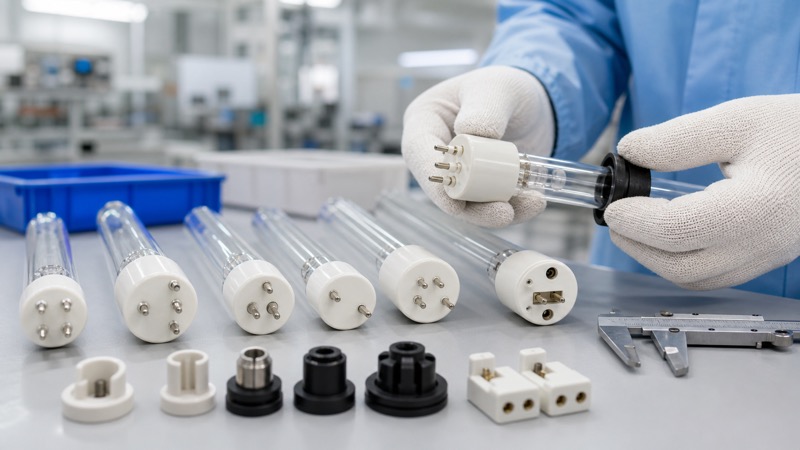
Quick Answer: What Should Buyers Check Before Ordering a UV Lamp by Base Type?
Buyers should confirm the old lamp code, total lamp length, tube diameter, base photos from both ends, number of pins, pin spacing, base material, wiring direction, ballast label and equipment application. For unclear models, close-up photos of the lamp ends are more useful than a general equipment photo.
| Base Detail | Why It Matters | What to Send |
|---|---|---|
| Pin count | Defines the electrical connection and holder compatibility. | Clear end photos and number of visible pins. |
| Pin spacing | Similar-looking bases may not fit the same holder. | Close-up photo with ruler or caliper measurement. |
| Base material | Ceramic, plastic and special caps suit different heat and installation needs. | Photos of old base, cap and holder. |
| Wiring direction | Affects ballast connection and equipment assembly. | Wire lead photos, connector photos and ballast label. |
1. Do Not Match UV Lamps by Wattage Alone
Wattage is important, but it is not enough for replacement lamp matching. Two lamps may have the same power but different tube length, base type, pin layout or ballast requirement. If the base is wrong, the lamp may not fit the holder or may not connect safely.
For model matching, start with the complete lamp specification and compare it with BIOSUN UV germicidal lamp tubes. If the model code is unclear, send photos and measurements rather than guessing from wattage.
2. Identify the Lamp Shape Before the Base
UV lamps can be straight, U-shaped, H-type, compact or cold cathode designs. The lamp shape affects the base type and installation position. A straight lamp may use one base at each end, while compact lamps may use a single multi-pin base.
Replacement buyers should confirm whether the lamp is for a water sterilizer, air disinfection unit, surface treatment system or appliance module. The application helps narrow down likely base and holder options.
3. Check Pin Count and Pin Layout Carefully
Pin count and pin spacing are common causes of mismatch. Some bases look similar in photos but use different spacing or pin direction. If the replacement lamp does not match the holder, buyers may discover the issue only after receiving the shipment.
Close-up end photos are essential. Place the old lamp beside a ruler or caliper when possible. For distributors, keeping base photos in a model record can reduce repeat matching time for future orders.
4. Match the Holder, Cap and Connector Together
The lamp base should be reviewed with the holder, cap and connector. A correct lamp may still be difficult to install if the old holder is cracked, the cap is loose or the connector is not compatible with the wiring route.
BIOSUN supplies related UV lamp accessories such as holders, caps, O-rings and connectors. For maintenance projects, buyers should send photos of both the lamp base and the installed accessory position.
5. Review Ballast Compatibility With the Base and Wiring
The base and pins connect the lamp to the electrical system, so ballast matching should also be checked. Wrong wiring or a mismatched ballast may cause starting failure, flickering or shortened lamp life.
When replacing a lamp, send the label of the UV electronic ballast, wiring photos and the number of lamps driven by one ballast. For OEM projects, review the lamp, base, connector and ballast as one system.
6. Water Systems Need Quartz Sleeve and Sealing Checks
In water sterilizers, the lamp base area often interacts with the quartz sleeve, cap, sealing nut and O-rings. A replacement lamp may match electrically but still fail to install if the sleeve or cap structure is different.
For water treatment maintenance, check quartz sleeves and sealing parts together with the lamp base. This reduces downtime and avoids separate accessory orders after the lamp arrives.
7. Replacement Buyers Should Create a Simple Model Record
A useful replacement record includes old lamp code, wattage, wavelength, total length, tube diameter, base photos, pin count, ballast model, quartz sleeve size and equipment model. This record helps purchasing teams reorder the correct part quickly.
For broader replacement planning, buyers can also review BIOSUN guidance on UV lamp replacement model matching. The same logic applies: dimensions, base, ballast and application should be confirmed together.
8. Buyer Checklist Before Sending an Inquiry
- Old lamp code and clear photos of the printed marking
- Total lamp length and tube diameter
- Close-up photos of both lamp bases
- Pin count, pin spacing and base material
- Photos of holder, cap, connector and wire leads
- Ballast label and wiring photos
- Equipment type, quantity and destination country
- Whether the order is for maintenance, distributor stock or OEM production
Common Questions About UV Lamp Base Matching
Can a lamp with the same wattage use a different base?
Yes. Wattage does not guarantee the same base, length, pin layout or ballast requirement. Buyers should confirm the complete specification before ordering.
Can I change the base type for an OEM project?
Sometimes yes, but the lamp structure, holder, wiring, ballast and installation space must be reviewed together. Base changes should be confirmed before sample production.
What if the old lamp base is damaged?
Send photos of the holder, cap, equipment model and any remaining lamp marking. BIOSUN can help narrow the replacement option from the available dimensions and application details.
Summary
UV lamp base type and pin layout should be checked together with lamp length, tube diameter, holder, connector, ballast and equipment application. For replacement buyers, close-up base photos and ballast labels are the fastest way to avoid mismatch.
For base matching support, review BIOSUN replacement UVC lamps or send your lamp photos through the BIOSUN inquiry page. The team can help confirm the closest lamp, base and accessory combination for maintenance or OEM projects.
Need a UV lamp quotation?
Send your model list to Baiousen and we will review the lamp matching details by email.
Send Inquiry