9 月 15, 2026
Amalgam UV Lamp Warm-Up Time and System Design Guide for Water Treatment OEMs
Learn how amalgam UV lamp warm-up time affects reactor controls, water flow, ballast matching and startup validation in OEM water treatment systems.
Amalgam UV lamps are widely selected for high-flow water treatment because they can deliver high UVC output from a compact reactor. However, their output does not reach the normal operating level immediately after power-on. For OEM buyers and system integrators, warm-up behavior must be included in the control logic, hydraulic design and acceptance test. This guide explains the main points to confirm when specifying amalgam UV lamps for a water treatment project.
What does amalgam UV lamp warm-up mean?
After ignition, the lamp needs time to reach a stable internal condition and useful UV output. During this period, electrical operation may already appear normal while the measured UVC intensity is still increasing. The actual warm-up curve depends on the lamp design, ballast, ambient conditions, cooling around the quartz sleeve and the reactor installation.
Warm-up time should therefore be defined by an output criterion, not only by the moment when visible light appears. For example, the system specification may require the UV sensor to reach an approved threshold before treated water is released downstream. The threshold and validation method must be agreed for the application.
Why warm-up behavior matters to water treatment OEMs
If process water begins flowing to the clean-water outlet before the required UV dose is available, the startup period may not meet the intended treatment condition. A well-designed system manages this interval through delayed flow, recirculation, diversion, alarm logic or a validated standby arrangement.
Warm-up also affects maintenance and operating cost. Frequent shutdown and restart cycles can create repeated periods of reduced output and additional electrode stress. Buyers comparing UV germicidal lamp tubes should provide the expected switching frequency, daily operating hours and process schedule rather than selecting on nominal wattage alone.
Factors that change amalgam lamp warm-up time
Lamp construction and power rating
Different lamp families use different amalgam formulations, tube dimensions, electrode designs and operating currents. Two lamps with similar nominal power may not have the same startup curve. OEM buyers should request the warm-up data for the exact model and intended ballast combination.
Water and air temperature
The thermal condition around the lamp influences mercury vapor pressure and UV output. Cold influent water, high flow during startup or strong external cooling may lengthen the time needed to reach stable performance. Excessive temperature can also move the lamp away from its preferred operating range. The amalgam UV lamp temperature management guide explains how sleeve temperature, flow and cooling should be reviewed together.
Quartz sleeve condition
The quartz sleeve separates the lamp from water and affects heat transfer as well as UV transmission. Sleeve diameter, wall thickness, fouling and water-film conditions can change the measured startup response. Use the same sleeve specification during validation that will be used in the production reactor.
Ballast compatibility
The lamp must operate with a correctly matched UV electronic ballast. Starting method, operating current, power control and fault protection all influence system behavior. Buyers can use the UV lamp current and ballast compatibility guide to organize the electrical data before sample testing.
Lamp age and operating history
Startup performance can change as a lamp accumulates operating hours. Acceptance tests should distinguish between a new-lamp reference and the minimum acceptable output near the planned replacement point. This allows the control threshold to reflect real maintenance conditions rather than only factory-new performance.
Design the startup sequence before selecting the lamp
1. Define the required treatment condition
Start with the target flow, water quality, UV transmittance, reactor geometry and required validation approach. Lamp power by itself does not define delivered UV dose. The OEM should determine what sensor reading, calculated dose or operating state is required before normal flow is permitted.
2. Decide how water is handled during warm-up
Common strategies include keeping the inlet valve closed, recirculating water, diverting startup flow or maintaining one reactor in standby. The suitable method depends on whether the application is continuous, batch-based or allowed to pause during lamp startup.
3. Use interlocks and status signals
The control system should distinguish lamp ignition, ballast-ready status, UV intensity, flow permissive and alarm conditions. A timer alone may be insufficient if incoming water temperature or lamp condition varies significantly. Where a UV sensor is used, its location and maintenance plan should be part of the reactor design.
4. Plan for power interruption and automatic restart
OEM buyers should define what happens after a short power loss. The system may need to close or divert flow, restart lamps in stages, wait for the UV threshold and record an alarm. The logic should be tested under realistic interruption scenarios before shipment.
5. Avoid unnecessary short cycling
If the process stops briefly and frequently, it may be better to use a validated standby or reduced-power mode than to switch lamps off each time. The correct approach depends on the lamp and ballast capabilities, energy target, thermal condition and required disinfection performance.
How to test warm-up performance during sample approval
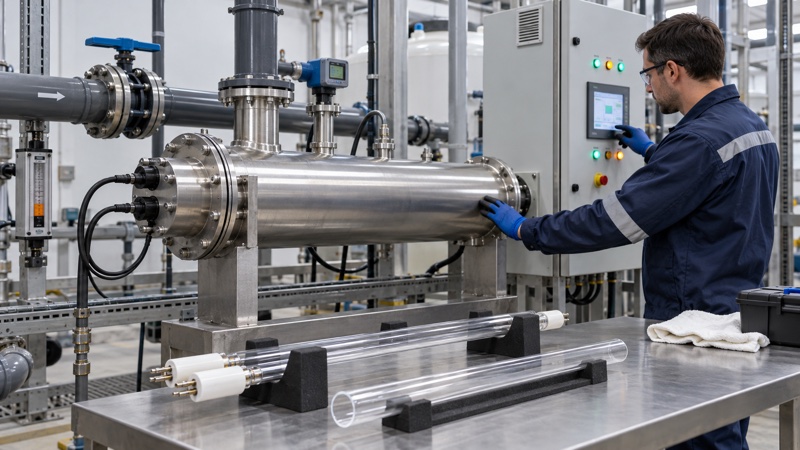
A practical warm-up test should use the intended lamp, ballast, sleeve and reactor arrangement. Record the water or ambient temperature, flow condition, input power, lamp current, UV sensor response, alarm status and time to the agreed threshold. Repeat the test from a defined cold-start condition so results can be compared.
The first sample should not be approved from appearance and ignition alone. Add warm-up data to the record described in the UV lamp sample approval guide, then retain the accepted curve or threshold for future production checks.
Specify the complete lamp-reactor system
Lamp and ballast pair
Record the full lamp model, ballast model, input supply, operating current, power setting and connector arrangement. If dimming is used, define the permitted levels and the control signal.
Sleeve and sealing components
Specify sleeve dimensions, open or closed-end design, sealing arrangement and permitted installation tolerance. The quartz sleeve O-ring and seal selection guide covers the mechanical details that should be checked before reactor assembly.
UV sensor and cleaning system
Define the sensor type, mounting location, alarm threshold and calibration or verification plan. If the reactor uses manual or automatic sleeve cleaning, include its effect on readings and the maintenance interval.
Spare parts and replacement planning
The service list should include approved lamp, ballast, quartz sleeve, seals and required UV lamp accessories. Keep the model mapping and batch data clear so field teams do not install a physically similar but unverified replacement.
RFQ checklist for amalgam UV lamp projects
Provide the following details when requesting a lamp or reactor-matching proposal:
- Application, target flow and operating schedule.
- Water temperature range and available UV transmittance data.
- Existing lamp, ballast, sleeve and reactor models.
- Required startup sequence and permitted warm-up interval.
- UV sensor, alarm and communication requirements.
- Number of starts, expected daily runtime and dimming needs.
- Sample quantity, annual demand and OEM marking requirements.
If the project is replacing an existing lamp, also send photos of the model marking, ceramic bases, connectors and chamber installation. BIOSUN can review these through the UV lamp inquiry page.
FAQ
Does an amalgam UV lamp reach full output immediately?
No. The lamp needs a warm-up period before reaching stable UV output. The required time varies with the lamp, ballast, sleeve, temperature and reactor conditions.
Can a fixed timer control the startup period?
A timer can be part of the sequence, but it should be based on validated operating conditions. Applications with changing temperature, flow or lamp age may also require UV intensity feedback and interlocks.
Should water flow through the reactor during warm-up?
That depends on the validated design. Flow may cool the lamp and affect warm-up, while untreated startup water may need to be held, recirculated or diverted. The OEM should define the hydraulic strategy before commissioning.
What data should be requested from the lamp supplier?
Request the exact lamp and ballast specifications, operating current, power, expected warm-up behavior, temperature guidance, switching limitations and sample-test recommendations.
Work with BIOSUN on amalgam UV lamp integration
BIOSUN supports water treatment OEMs and distributors with amalgam lamp selection, ballast matching, quartz sleeve coordination, sample testing and replacement-model review. Send your flow conditions, existing model information and startup requirements through the contact page to prepare a practical system-matching proposal.
Need a UV lamp quotation?
Send your model list to Baiousen and we will review the lamp matching details by email.
Send Inquiry