8 月 25, 2026
Amalgam UV Lamp Temperature Management Guide for Water Treatment Systems
A B2B guide to amalgam UV lamp temperature management for water treatment systems, covering flow rate, quartz sleeves, ballast matching, seals, sample testing and maintenance.
Amalgam UV lamps are selected for high-output water treatment systems, but their performance still depends on correct temperature management. If the lamp, quartz sleeve, ballast and reactor are not matched as one system, buyers may see unstable UV output, shortened lamp life, alarm issues or unnecessary maintenance cost.
This guide is written for overseas B2B buyers, water treatment OEMs, UV reactor manufacturers and maintenance distributors who need to select or replace amalgam UV lamps in high-flow water sterilization systems.
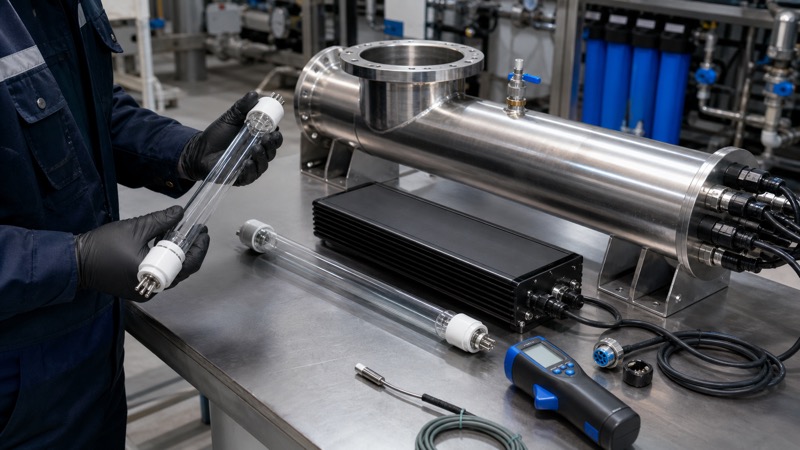
Quick Answer: Why Does Temperature Matter for Amalgam UV Lamps?
Amalgam UV lamps are designed for higher UV output and more stable operation than many standard low-pressure mercury lamps, but they still require correct temperature conditions. Buyers should confirm water temperature, flow rate, sleeve size, ballast matching, installation orientation, cooling condition and maintenance access before approving samples. Temperature should be managed through system design, not by choosing lamp wattage alone.
| Control Point | Buyer Should Check | Why It Matters |
|---|---|---|
| Water temperature | Normal and peak operating range | Water temperature affects sleeve temperature and lamp output stability. |
| Flow rate | Minimum, normal and maximum flow | Low flow can reduce cooling; high flow affects dose design. |
| Quartz sleeve | Diameter, wall thickness and cleanliness | Sleeve fit and fouling affect heat transfer and UV transmission. |
| Ballast | Output current, lamp wattage and wiring | Incorrect electrical matching can overdrive or underdrive the lamp. |
| Maintenance | Cleaning, replacement and alarm checks | Temperature-related issues are often found during routine service. |
1. Confirm Whether Amalgam Lamps Are the Right Choice
Amalgam UV lamps are commonly used when a system needs higher UVC output, fewer lamps, compact reactor design or better output stability in demanding water treatment conditions. They are not always the best choice for every small flow or low-cost replacement project.
Buyers comparing lamp types can start from BIOSUN amalgam UV lamps and the existing amalgam UV lamp selection guide. Standard UV germicidal lamp tubes may still be more suitable for some systems with lower output requirements.
2. Review Water Temperature and Flow Conditions
Water temperature and flow rate directly influence the operating environment around the quartz sleeve. If flow is too low, the lamp area may not be cooled as expected. If the system has frequent start-stop cycles, peak water temperatures or seasonal changes, these conditions should be included in the specification.
For OEM buyers, the reactor drawing should include flow direction, chamber volume, lamp position and sensor location. For replacement buyers, photos of the existing reactor and operating conditions help confirm whether the current lamp type is appropriate.
3. Match the Quartz Sleeve to the Lamp and Reactor
The quartz sleeve is more than a protective tube. It affects UV transmission, lamp clearance, sealing, maintenance access and heat transfer around the lamp. A sleeve that is too narrow, too dirty or incorrectly positioned can create performance and maintenance problems.
BIOSUN quartz sleeves should be matched by length, outer diameter, inner diameter, wall thickness and end structure. Buyers can also use the quartz sleeve selection guide for UV water sterilizers when confirming sleeve compatibility.
4. Check O-Rings, Seals and Sleeve Position
Seal design affects sleeve position and service reliability. If O-rings are incorrect or over-compressed, the sleeve may sit unevenly, leak or become difficult to remove during maintenance. This can create unnecessary downtime for high-flow water treatment systems.
For sealing details, review the BIOSUN quartz sleeve O-ring and seal selection guide. For distributors, stocking the correct seal kit with each sleeve model reduces service delays.
5. Use a Compatible UV Electronic Ballast
Temperature management is not only mechanical. The ballast must match the amalgam lamp’s electrical requirements. Incorrect current, voltage, wiring or start-up behavior can cause unstable output, shortened service life or lamp failure.
BIOSUN UV electronic ballasts should be selected together with the lamp model. If a replacement lamp flickers, fails to start or triggers alarms, use the UV lamp troubleshooting guide to check lamp, ballast, connector and sleeve conditions.
6. Avoid Overheating From Poor Installation
Installation space, wiring route, cabinet ventilation and reactor layout can all affect operating temperature. Buyers should avoid designs where the ballast is placed in a hot sealed area, where cables are too close to hot surfaces, or where service access requires disturbing the sleeve seal repeatedly.
For equipment builders, temperature checks should be included during sample testing. For service teams, repeated early lamp failure should trigger a review of ballast location, water flow, sleeve fouling and installation conditions instead of simply replacing lamps again.
7. Include Temperature Checks in Sample Approval
Amalgam UV lamp projects should go through real operating tests before batch production. Buyers should check starting behavior, stable operation, ballast temperature, reactor surface temperature, alarm signals, lamp output trend and service access.
For structured testing, use the BIOSUN UV lamp sample approval guide. A sample record should include lamp model, ballast model, sleeve size, water condition and test result so future repeat orders remain consistent.
8. Plan Maintenance and Spare Parts Together
Temperature-related issues can become worse when lamps age, sleeves foul or seals degrade. Maintenance plans should include lamp replacement interval, quartz sleeve cleaning, seal inspection, ballast checks and spare parts availability.
The BIOSUN UV lamp lifespan and replacement interval guide helps plan service timing. Distributors can also use the UV lamp spare parts stocking guide to organize amalgam lamps, quartz sleeves, ballasts and accessories.
Buyer Checklist for Amalgam UV Lamp Temperature Management
- Target application, flow rate and water temperature range
- Reactor drawing, chamber size and lamp position
- Amalgam lamp wattage, length, base type and electrical data
- Quartz sleeve length, diameter, wall thickness and end structure
- O-rings, seals, gland nuts and service access method
- Ballast model, input voltage, output current and installation location
- Sample test data, alarm behavior and stable operating checks
- Replacement interval, spare parts list and destination market
Common Questions About Amalgam Lamp Temperature
Do amalgam UV lamps need temperature control?
Yes. They are designed for stable high-output operation, but reactor design, water temperature, flow rate, sleeve fit and ballast matching still affect performance.
Can a standard ballast run an amalgam UV lamp?
Only if the electrical requirements match. Buyers should not assume compatibility by connector shape or lamp length. Ballast output data must be confirmed.
Can sleeve fouling affect amalgam lamp performance?
Yes. Fouling reduces UV transmission and can affect heat transfer around the sleeve. Sleeve cleaning should be part of the maintenance plan.
Summary
Amalgam UV lamp temperature management depends on the full system: water conditions, flow rate, reactor layout, quartz sleeve fit, seals, ballast matching, installation environment and maintenance planning. Buyers who confirm these details before sampling can reduce early failure, unstable output and repeat service problems.
For high-flow water treatment projects, send your flow rate, reactor drawing, lamp photos, ballast data and sleeve dimensions through the BIOSUN inquiry page. BIOSUN can help match amalgam UV lamps, quartz sleeves, ballasts and related accessories for OEM and replacement systems.
Need a UV lamp quotation?
Send your model list to Baiousen and we will review the lamp matching details by email.
Send Inquiry