Aug 4, 2026
UV Air Duct Disinfection Lamp Selection Guide for HVAC OEM Buyers
A practical HVAC buyer guide to selecting UV air duct disinfection lamps, covering wavelength, ballast matching, duct installation, holders, safety design and maintenance planning.
UV air duct disinfection projects need more than a suitable lamp length. For HVAC OEM buyers, air handling unit manufacturers and commercial ventilation contractors, the UV lamp must match airflow, duct space, mounting structure, ballast, holder design, ozone requirement and maintenance access. A lamp that looks correct in a catalog may still create installation or service problems if these details are not confirmed before sampling.
This guide explains how overseas B2B buyers can select UV germicidal lamps for air ducts, AHUs, coil disinfection modules and related air disinfection equipment.
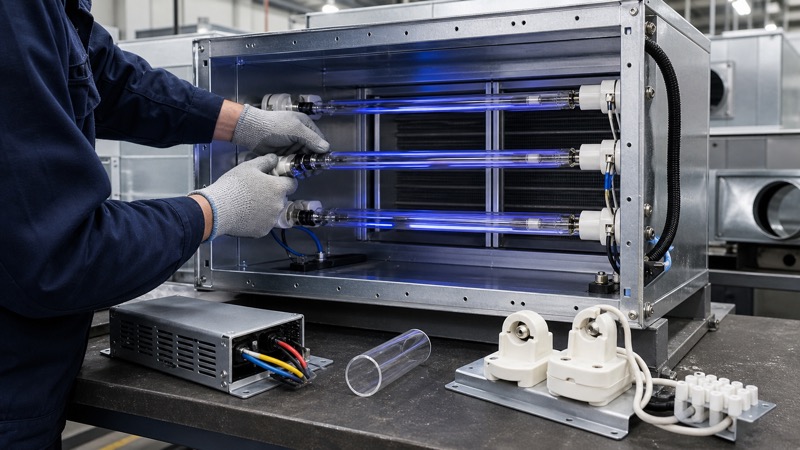
Quick Answer: How Should Buyers Select UV Lamps for HVAC Air Ducts?
For HVAC air duct disinfection, buyers should confirm the target function first: coil surface disinfection, in-duct air treatment, odor control or OEM module integration. Then match lamp wavelength, output, length, base type, holder position, ballast, wiring, operating temperature, airflow exposure and maintenance access. For most occupied-building HVAC applications, ozone-free 254 nm lamps are the standard starting point unless the equipment is specifically designed for ozone control.
| Selection Point | Buyer Should Check | Why It Matters |
|---|---|---|
| Application target | Coil, duct air, AHU module or odor control | Different targets require different lamp positions and output levels. |
| Wavelength | Ozone-free 254 nm or ozone-generating 185/254 nm | Impacts indoor safety, material selection and system design. |
| Electrical matching | Ballast output, lamp current, wiring and voltage | Incorrect matching can cause start-up failure or short lamp life. |
| Mechanical fit | Length, base type, holder, connector and access door | Installation and replacement must be practical in the duct or AHU. |
| Service plan | Replacement interval, warning label and spare parts | Maintenance planning affects long-term project reliability. |
1. Define the HVAC Disinfection Target
The first decision is where the UV lamp will work. Coil disinfection focuses on surfaces where moisture and organic buildup may collect. In-duct air treatment focuses on irradiating moving air. OEM air disinfection modules may combine lamp tubes, holders, wiring, safety covers and control logic in a compact assembly.
Buyers can review BIOSUN UV application solutions to compare air disinfection, appliance modules and commercial equipment use cases. If the project uses standard straight lamps, BIOSUN UV germicidal lamp tubes are usually the first product category to evaluate.
2. Choose Ozone-Free or Ozone-Generating Lamps Carefully
Most HVAC air duct and AHU projects for occupied buildings should begin with ozone-free 254 nm UVC lamps. Ozone-generating lamps may be used only when the system is engineered for ozone treatment, exhaust control, safety interlocks and correct operating instructions.
Before sampling, buyers should confirm the project requirement with building safety rules and equipment design. BIOSUN’s guide to ozone-free vs ozone-generating UVC lamps explains how this choice affects lamp material, application suitability and user safety.
3. Match Lamp Output With Duct Space and Airflow
Air duct systems vary widely in duct size, airflow speed, coil depth and lamp mounting distance. A small lamp may be suitable for a compact appliance module but insufficient for a large AHU section. A high-output lamp may be unnecessary if the space is small or if the mounting position creates excessive exposure to nearby materials.
For high-output air or water disinfection designs, buyers may also compare standard low-pressure lamps with amalgam UV lamps. Amalgam lamps can provide higher output, but they need correct temperature management, ballast matching and installation review.
4. Confirm Ballast and Electrical Design
The ballast should be selected together with the lamp, not after the mechanical design is already fixed. Buyers should confirm input voltage, output current, lamp wattage, wiring length, connector style, grounding method and enclosure position. For OEM modules, the ballast location must also allow cooling and service access.
BIOSUN UV electronic ballasts can be matched with different lamp types and project requirements. For replacement work, the existing ballast label and wiring photo help confirm whether a new lamp can be used directly or whether the ballast should be replaced.
5. Check Holders, Bases, Wiring and Access Doors
HVAC installations often fail at the small mechanical details. Lamp holders must secure the lamp under vibration and airflow. Base type, pin layout, wire direction and connector size should match the duct or AHU structure. The technician should also be able to remove the lamp through an access door without dismantling the whole module.
Buyers should compare the required holder and connector with BIOSUN UV lamp accessories. For more detail on pin and base selection, use the guide to UV lamp base types and pin layout matching.
6. Consider Material Exposure and Safety Interlocks
UVC lamps should not expose unsuitable plastics, cables, filters or maintenance staff. The design should consider lamp shielding, viewing windows, warning labels, door switches and power-off procedures during service. HVAC buyers should confirm whether the lamp will shine directly on filters, insulation, wire jackets or drain pan materials.
For compact OEM air disinfection products, UV lamps may also be combined with other purification technologies. Buyers comparing module structures can review the photoplasma air disinfection module guide for OEM appliance and HVAC-related selection considerations.
7. Plan Replacement and Maintenance From the Beginning
A duct lamp project should include a maintenance plan before batch orders begin. Buyers should define the replacement interval, spare lamp model, ballast model, holder type, installation instructions and service access method. If the lamp is difficult to reach, routine maintenance may be skipped, reducing long-term disinfection performance.
For established maintenance programs, BIOSUN replacement UVC lamps can be matched by model, wattage, length, base and electrical details. Buyers can also use the UV lamp lifespan and replacement interval guide when planning service schedules.
8. Approve Samples Before Batch HVAC Production
Before batch production, buyers should test the sample lamp inside the real or simulated HVAC structure. Check start-up, ballast temperature, holder stability, wiring route, lamp clearance, access door removal, labeling and packaging. Any design adjustment should be recorded before the final order.
For OEM and replacement buyers, BIOSUN’s UV lamp sample approval guide provides a practical structure for checking samples before production release.
Buyer Checklist for HVAC UV Lamp Inquiries
- HVAC application: coil surface, in-duct air, AHU module or OEM appliance module
- Duct or AHU dimensions, airflow information and mounting position
- Required lamp wavelength: ozone-free 254 nm or ozone-generating 185/254 nm
- Lamp wattage, length, tube diameter, base type and pin layout
- Ballast input voltage, output current, wiring route and enclosure position
- Holder, connector, cable length, access door and replacement method
- Material exposure, shielding, safety switch and warning label requirements
- Sample quantity, expected batch quantity and destination market
Common Questions About HVAC UV Lamps
Can one UV lamp model fit all HVAC duct systems?
No. Duct size, airflow, mounting distance, access method, ballast position and safety design vary by equipment. Buyers should provide drawings or photos before ordering samples.
Should HVAC air duct systems use ozone-generating lamps?
Usually not for occupied-building HVAC systems unless the equipment is specifically designed for ozone control. Ozone-free 254 nm lamps are the safer starting point for most air duct disinfection projects.
What information should an OEM buyer send first?
Send the duct or module drawing, target application, lamp space, voltage, airflow information, holder requirement, wiring direction, sample quantity and expected batch quantity.
Summary
UV air duct disinfection lamp selection should be based on application target, wavelength, output, ballast matching, mounting structure, safety design and maintenance access. For HVAC OEM and commercial ventilation projects, confirming these details before sampling reduces wrong orders and improves long-term service reliability.
For HVAC UV lamp matching support, send your duct drawings, module photos and electrical requirements through the BIOSUN inquiry page. BIOSUN can help compare UV germicidal lamps, ballasts, accessories and OEM air disinfection module options for your project.
Need a UV product quotation?
Send the model, drawing, application and expected quantity. BIOSUN will review the matching details and reply by email.
Send Inquiry