Jul 28, 2026
Cold Cathode UV Lamps for Compact OEM Equipment: Buyer Guide
A B2B buyer guide to cold cathode UV lamps for compact OEM equipment, covering structure, wavelength, driver matching, connectors, quartz sleeves and sample approval.
Cold cathode UV lamps are often used when equipment needs a compact lamp structure, lower heat load, flexible installation space or special OEM integration. For buyers, the decision should not be based only on lamp diameter or appearance. Cold cathode UVC lamps must still be matched by wavelength, length, base, wire leads, driver or ballast, installation space and safety design.
This guide is written for overseas B2B buyers, appliance manufacturers, compact air disinfection module builders, water sterilizer designers and maintenance distributors comparing cold cathode UV lamps with standard hot cathode UVC lamp options.
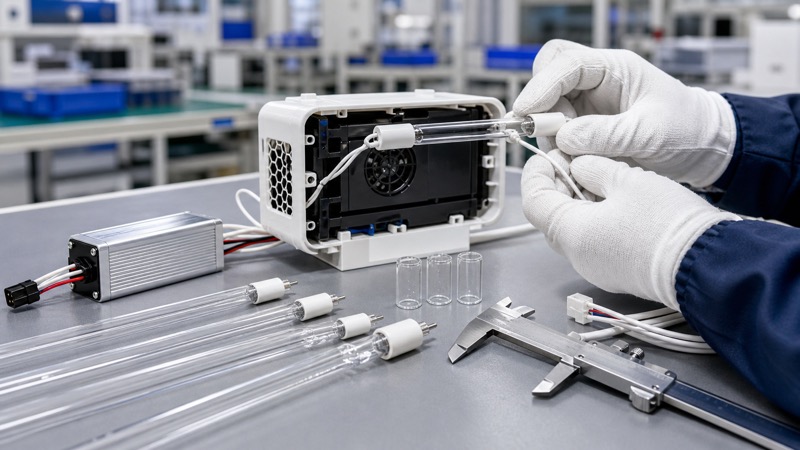
Quick Answer: When Are Cold Cathode UV Lamps a Good Fit?
Cold cathode UV lamps are a practical option for compact OEM equipment, appliance modules, small air treatment units and applications where a slim lamp shape or flexible installation design is required. Buyers should confirm lamp length, tube diameter, wavelength, driver matching, wire leads, connector type and expected operating environment before ordering samples.
| Selection Point | Why It Matters | Buyer Check |
|---|---|---|
| Compact structure | Cold cathode lamps can fit smaller modules and appliance spaces. | Confirm available length, diameter and mounting position. |
| Wavelength | Ozone-free and ozone-generating requirements affect lamp material and safety. | Confirm 254 nm or 185/254 nm before sampling. |
| Driver matching | The lamp needs a compatible electrical driver or ballast. | Send voltage, wiring and driver information. |
| OEM installation | Wire leads, connectors and holders affect assembly efficiency. | Check connector type, wire length and service access. |
1. Start With the Equipment Space
Cold cathode UV lamps are often selected because the equipment has limited installation space. Compact air purifiers, appliance modules, vehicle purification units and small disinfection chambers may not have enough room for standard lamp shapes.
Before discussing wattage, buyers should send the available installation space, module photos or equipment drawing. BIOSUN can compare the project with UV lamp application solutions and advise whether a cold cathode design, straight hot cathode lamp or compact shaped lamp is more suitable.
2. Compare Cold Cathode and Standard UV Lamp Options
Cold cathode lamps are not a universal replacement for all UVC systems. Standard hot cathode lamps may be more suitable for some water sterilizers, high-output systems or equipment with established ballast and holder structures.
Buyers can start from BIOSUN UV germicidal lamp tubes and compare tube shape, wattage, length, base type and application. If the project is compact or customized, cold cathode options can then be evaluated with the engineering team.
3. Confirm Wavelength and Ozone Requirement
Like other UV lamps, cold cathode UV lamps should be selected by wavelength. Many indoor appliance and compact air disinfection projects use ozone-free 254 nm lamps. Some special odor or oxidation systems may require ozone-generating 185/254 nm lamps, but only when the equipment is designed for ozone control.
For wavelength decisions, review BIOSUN guidance on ozone-free vs ozone-generating UVC lamps. This choice affects sample approval, user instructions, safety design and production documentation.
4. Match the Lamp With the Correct Driver or Ballast
Cold cathode lamps need proper electrical matching. A similar-looking lamp may not start correctly or may run unstably if the driver output, wiring or connector is not matched. For OEM projects, the lamp and driver should be reviewed as one system.
When sending an inquiry, include operating voltage, driver information, wiring photos and connector requirements. BIOSUN can help compare the lamp with UV electronic ballasts or driver options for the intended equipment.
5. Review Wire Leads, Connectors and Holders
Compact products often have tight assembly space, so wire length, connector type and holder position are important. A lamp may meet technical specifications but still create assembly problems if the wire exits in the wrong direction or the connector is too large for the housing.
Buyers should review UV lamp accessories such as holders, caps, connectors and wire leads during sample approval. For more detail, see the guide on UV lamp holders, caps and connectors matching.
6. Check Quartz Sleeve Requirements for Water or Humid Environments
Some compact systems still require protection from water, condensation or humidity. If the lamp is used in a water sterilizer or humid air path, the quartz sleeve or protective structure should be checked before sampling.
For water-related projects, compare lamp dimensions with BIOSUN quartz sleeves. Sleeve diameter, end structure, sealing position and lamp clearance can affect installation and maintenance.
7. Approve Samples Before Batch Production
Cold cathode UV lamp projects should pass sample approval before batch orders. Buyers should check lamp length, diameter, wavelength, starting behavior, heat performance, wire length, connector fit, packaging and final model marking.
For structured approval, use the BIOSUN article on UV lamp sample approval for OEM and replacement buyers. A written sample record reduces repeated confirmation work for future orders.
8. Buyer Checklist Before Sending an Inquiry
- Target application and equipment photos
- Available installation space and module drawing
- Required lamp length, tube diameter and shape
- Wavelength requirement: 254 nm or 185/254 nm
- Operating voltage, driver or ballast information
- Wire lead length, connector type and holder requirement
- Quartz sleeve or protective structure requirement
- Sample quantity, expected batch quantity and destination country
Common Questions About Cold Cathode UV Lamps
Are cold cathode UV lamps only for air disinfection?
No. They are often used in compact air and appliance equipment, but selection depends on structure, wavelength, driver matching and environmental protection. Some projects may require a different lamp type.
Can a cold cathode lamp replace a standard UVC lamp?
Only after technical matching. Buyers must confirm dimensions, wavelength, electrical driver, holder, connector and equipment design. It should not be treated as a direct replacement by appearance.
What is the first step for an OEM cold cathode lamp project?
Send the application, installation space, drawings or photos, voltage requirement and target quantity. This allows the supplier to check whether a standard model or customized sample is more appropriate.
Summary
Cold cathode UV lamps are useful for compact OEM equipment and special installation spaces, but they still require careful matching. Buyers should confirm structure, wavelength, driver, wire leads, connectors, holders, protection parts and sample approval before batch production.
For compact UV lamp matching support, review BIOSUN replacement UVC lamps or send your module drawings, lamp photos and requirements through the BIOSUN inquiry page. BIOSUN can help compare cold cathode and standard UV lamp options for OEM and replacement projects.
Need a UV product quotation?
Send the model, drawing, application and expected quantity. BIOSUN will review the matching details and reply by email.
Send Inquiry