9 月 4, 2026
UV Lamp Aging Test and Quality Control Guide for OEM Buyers
A practical OEM buyer guide to UV lamp aging tests, ballast compatibility checks, batch records and pre-shipment quality control.
For OEM buyers, distributors and UV system service teams, a UV lamp aging test is one of the most useful quality-control steps before shipment. It helps confirm that UV germicidal lamp tubes start correctly, run stably, match the intended ballast and are ready for packing. A clear aging-test standard also makes repeat orders easier to compare across batches.
What is a UV lamp aging test?
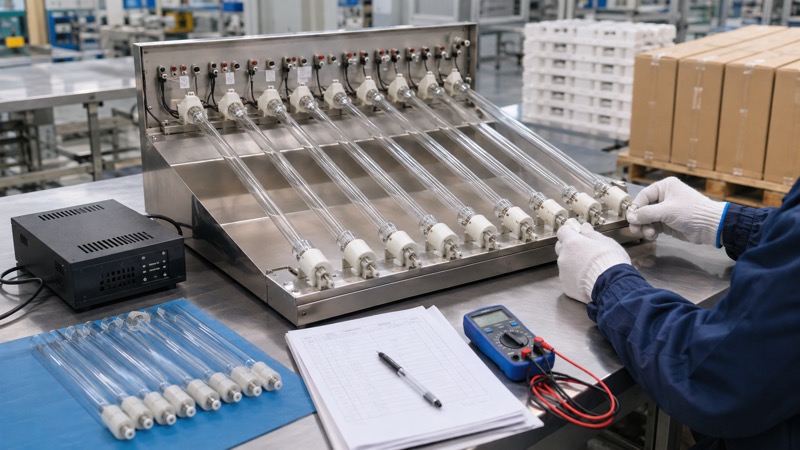
A UV lamp aging test is a controlled run-in process after production and assembly. Lamps are installed on a test rack, powered under defined electrical conditions and inspected for ignition, stable operation, abnormal flicker, base connection issues and visible defects. For buyers sourcing replacement UVC lamps, this step reduces the risk of receiving lamps that look correct but fail during first installation.
The aging test does not replace full specification matching. It works together with lamp length, diameter, base type, pin layout, wattage and operating current checks. Buyers can use the fields from a UV lamp specification sheet checklist to define what should be confirmed before the test rack is started.
Why OEM buyers should care before bulk shipment
Small quality problems become expensive after export. A lamp that fails to start, flickers with the specified ballast or has a weak base connection can create field-service costs, replacement disputes and customer downtime. For distributors, these issues also damage confidence in the model code and make future stocking decisions harder.
A documented aging process gives both the buyer and supplier a common reference. It shows which lamp model was tested, what ballast was used, how the batch was inspected and whether packing was released only after the lamps passed. This is especially important for private label orders and repeated OEM projects.
Key items to check during UV lamp aging
Ignition and stable operation
Each lamp should start under the agreed electrical condition and remain stable during the defined test period. If a lamp needs repeated starting attempts, shows unstable operation or reacts differently from the approved sample, it should be separated for investigation before shipment.
Ballast compatibility
A UV lamp cannot be evaluated separately from its power supply. The lamp should be tested with the correct UV electronic ballast or a verified equivalent. This is critical when buyers are replacing lamps in existing systems, because a physical fit does not guarantee electrical compatibility.
Base, pin and connection quality
During aging, technicians should inspect ceramic bases, pin alignment, wire connections and cap stability. These details directly affect installation reliability and are also covered in the UV lamp base types and pin layout matching guide.
Glass and sleeve-related inspection
Clear quartz glass should be checked for visible cracks, contamination or handling damage. If the lamp is supplied with quartz sleeves, the buyer should also confirm sleeve length, diameter and sealing interface before packing.
How aging-test standards differ by lamp type
Standard low-pressure lamps, high-output lamps and amalgam UV lamps may require different operating checks. Amalgam lamps are often used in higher-flow water treatment systems and may have different warm-up behavior from standard lamps. Buyers should not assume that one aging standard applies to every UV lamp family.
For long-life or high-output replacement programs, aging data should be compared with the approved sample and expected operating conditions. The UV lamp lifespan and replacement interval guide can help buyers connect incoming quality checks with maintenance planning after installation.
What records should be kept for each batch?
Aging-test records should be practical rather than overly complicated. For each batch, keep the model code, quantity tested, ballast or test equipment used, test duration, inspection result, nonconforming quantity and release date. Photos of the test rack and packing status can also support traceability for export orders.
When the article number is a private label model, keep the aging record aligned with the sample approval file, carton label and purchase order. This helps prevent repeat-order mistakes and supports spare-parts tracking for distributors.
Pre-shipment QC checklist for UV lamp buyers
Confirm the approved sample before testing
The factory should test production lamps against the same specification that the buyer approved. BIOSUN’s UV lamp sample approval guide explains why the sample record should include dimensions, electrical data, base photos and packaging requirements.
Check accessories and replacement parts together
If the order includes holders, cables, sleeves or other UV lamp accessories, these items should be checked before the final carton is sealed. A lamp may pass aging, but the complete replacement kit still needs the correct supporting parts.
Inspect packaging after aging
After the test is finished, lamps should cool, be cleaned if required and be placed into protective packaging. The UV lamp packaging and shipping guide gives buyers a useful reference for reducing breakage in export shipments.
How aging tests support long-term supplier evaluation
Buyers should not treat aging tests as a one-time requirement. Over several orders, batch records can show whether a supplier is maintaining stable production, whether defect types are repeating and whether corrective actions are effective. This makes supplier evaluation more objective than relying only on visual inspection after goods arrive.
For buyers building a regular UV lamp stocking program, combine aging-test records with the structure in the UV lamp spare parts stocking guide. This gives sales, warehouse and service teams a shared reference for which models are approved, stocked and supported.
FAQ
Does every UV lamp order need an aging test?
For OEM and replacement orders, aging testing is strongly recommended because it confirms starting behavior and basic stability before shipment. The exact test duration can be adjusted based on lamp type, order size and buyer requirements.
Can aging testing confirm UV output?
Aging testing can help screen operational problems, but UV output measurement requires suitable test equipment and a defined method. If UV intensity data is required, it should be listed clearly in the purchase specification before production.
What should buyers send before requesting QC support?
Send the existing lamp model, photos, wattage, base type, system application, ballast information and order quantity. BIOSUN can review the details through the UV lamp inquiry page and suggest a practical testing and replacement plan.
Work with BIOSUN on UV lamp QC and replacement matching
BIOSUN supports overseas OEM buyers and distributors with UV lamp model matching, sample approval, aging-test checks, packaging review and replacement-part coordination. To prepare a quotation or quality-control plan, send your lamp photos, technical drawing or existing model number through the contact page.
Need a UV lamp quotation?
Send your model list to Baiousen and we will review the lamp matching details by email.
Send Inquiry