8 月 18, 2026
Quartz Sleeve O-Ring and Seal Selection Guide for UV Water Sterilizers
A practical guide to selecting quartz sleeve O-rings and seals for UV water sterilizers, covering sleeve dimensions, reactor structure, material, compression and spare parts planning.
Quartz sleeve O-rings and seals are small parts, but they determine whether a UV water sterilizer can operate safely without leaks. If the O-ring size, material or compression is wrong, the system may leak after lamp replacement, damage the quartz sleeve, or create repeated maintenance calls for distributors and service teams.
This guide is written for overseas B2B buyers who purchase quartz sleeves, replacement UVC lamps, UV reactor spare parts or OEM water sterilization systems.
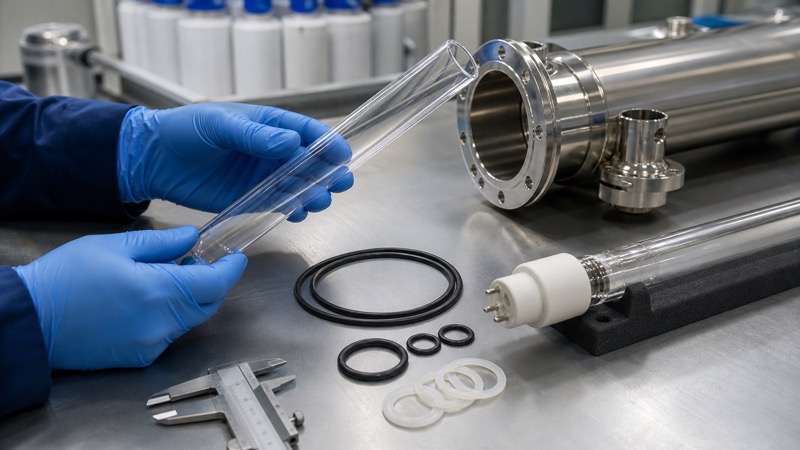
Quick Answer: How Should Buyers Select Quartz Sleeve O-Rings and Seals?
Buyers should match quartz sleeve O-rings by sleeve outer diameter, reactor sealing structure, O-ring cross-section, material, water temperature, chemical exposure and maintenance method. The O-ring should seal reliably without forcing the quartz sleeve out of position or creating stress on the glass. For repeat orders, the sleeve, O-ring, gland nut and reactor drawing should be confirmed together.
| Selection Point | Buyer Should Confirm | Why It Matters |
|---|---|---|
| Sleeve size | Outer diameter, wall thickness and end structure | The seal must fit the actual quartz sleeve, not only the reactor name. |
| O-ring profile | Inner diameter and cross-section | Incorrect compression can cause leaks or glass stress. |
| Material | EPDM, silicone, FKM or project-specific material | Water chemistry and temperature affect seal life. |
| Installation | Gland nut, end cap, groove and tightening method | Correct installation prevents twisting, pinching and uneven sealing. |
| Maintenance | Replacement interval and spare stock | Old seals should not be reused indefinitely during lamp service. |
1. Start With the Quartz Sleeve Dimensions
The O-ring must match the actual quartz sleeve. Buyers should confirm the sleeve outer diameter, inner diameter, wall thickness, total length, open or closed end structure and sealing position. A small measurement difference can affect compression and leak performance.
BIOSUN quartz sleeves can be matched by reactor type, sleeve drawing or physical sample. If the sleeve itself still needs confirmation, use the quartz sleeve selection guide for UV water sterilizers before confirming the seal.
2. Match the Reactor Sealing Structure
UV water sterilizers use different sealing structures. Some use a gland nut that compresses the O-ring around the sleeve. Others use an end cap, retaining ring, compression fitting or custom OEM sleeve holder. The same O-ring size may not perform the same way in two different reactor designs.
Buyers should send photos or drawings of the reactor end, gland nut, sleeve holder and sealing groove. For service teams, this information reduces wrong spare parts and helps identify whether the problem is the O-ring, sleeve, cap or installation method.
3. Choose the Correct O-Ring Material
O-ring material should match water temperature, chemical exposure and service environment. EPDM is common in many water treatment applications. Silicone may be used where flexibility is required. FKM may be considered for more demanding chemical resistance, depending on the project.
Material choice should be confirmed with the actual water quality and system conditions. If the UV system is used with cleaning chemicals, ozone, high temperature or special process water, the seal material should be reviewed before batch purchasing.
4. Avoid Over-Compression and Glass Stress
Quartz sleeves are glass components. If an O-ring is too thick, too hard or tightened unevenly, it can create stress on the sleeve end. Over-compression may not fail immediately, but it can increase the risk of cracks during operation, cleaning or future lamp replacement.
Buyers should check whether the O-ring sits evenly in the groove and whether the gland nut can be tightened without forcing the sleeve. For replacement programs, service instructions should define a consistent tightening method.
5. Replace Seals During Lamp or Sleeve Maintenance
Old O-rings may flatten, harden or absorb contaminants. Reusing the same seal after repeated lamp changes can increase leak risk. For water sterilizers, it is practical to stock O-rings together with quartz sleeves and replacement lamps.
The BIOSUN article on quartz sleeve cleaning in UV water treatment explains why sleeve condition affects disinfection performance. For maintenance teams, the UV lamp lifespan and replacement interval guide can help coordinate lamp, sleeve and seal service schedules.
6. Check Related Accessories Before Ordering
O-rings are usually part of a larger service set. Depending on the UV reactor, buyers may also need sleeve nuts, caps, holders, clips, connectors, UV lamps, ballasts and protective packaging. A correct seal is useful only if the rest of the service parts also fit the equipment.
BIOSUN UV lamp accessories include holders, caps, connectors and related installation parts. For electrical issues found during service, compare the system with BIOSUN UV electronic ballasts and review the UV lamp troubleshooting guide.
7. Build Seal Kits for Distributor Inventory
Distributors can reduce service delays by building seal kits for common reactor models. A kit may include O-rings, sleeve seals, gland nut references, lamp holder parts and installation notes. The kit should be linked to a specific sleeve size and UV lamp model.
For broader stock planning, the UV lamp spare parts stocking guide explains how to organize lamps, quartz sleeves, ballasts, accessories and packaging for repeated service orders.
8. Confirm Packaging for Glass and Rubber Parts
Quartz sleeves are fragile, and seals can be deformed by poor storage. Sleeve shipments should protect the glass from impact, while O-rings should be packed cleanly and kept away from sharp edges, compression damage and contamination.
Buyers shipping replacement parts internationally can review the UV lamp packaging and shipping guide. The same packaging discipline should be applied to quartz sleeves and seal kits.
Buyer Checklist for Quartz Sleeve O-Rings and Seals
- Quartz sleeve outer diameter, inner diameter, wall thickness and length
- Open end or closed end sleeve structure
- Reactor end cap, gland nut, groove or compression fitting design
- O-ring inner diameter, outer diameter and cross-section
- Seal material requirement based on water temperature and chemistry
- Installation method, tightening guidance and maintenance interval
- Related spare parts: UV lamp, sleeve, ballast, holders and connectors
- Sample quantity, expected batch quantity and destination market
Common Questions About Quartz Sleeve Seals
Can I reuse the old O-ring after replacing the UV lamp?
It may be possible in some cases, but it is not the best practice for repeat maintenance. Flattened, hardened or contaminated O-rings increase leak risk.
Is sleeve diameter enough to select an O-ring?
No. Sleeve diameter is important, but the reactor sealing structure, groove design, compression method and material requirement also matter.
Should O-rings be stocked with quartz sleeves?
Yes for UV water sterilizer service programs. Stocking sleeves without matching seals can delay repairs and create avoidable leakage problems.
Summary
Quartz sleeve O-ring and seal selection should be based on sleeve dimensions, reactor structure, O-ring profile, material, compression, installation method and maintenance schedule. For B2B buyers, confirming the sleeve and seal together reduces leakage risk and improves repeat order accuracy.
For matching support, send quartz sleeve photos, reactor end photos, dimensions and target quantity through the BIOSUN inquiry page. BIOSUN can help match quartz sleeves, O-rings, UV lamps and related accessories for water sterilization systems.
Need a UV lamp quotation?
Send your model list to Baiousen and we will review the lamp matching details by email.
Send Inquiry