8 月 7, 2026
UV Lamp Troubleshooting Guide: No Light, Flicker and Low Output
A practical troubleshooting guide for UV germicidal lamp problems, covering no light, flicker, low output, ballast mismatch, quartz sleeve fouling and replacement checks.
When a UV germicidal lamp has no light, flickers, triggers an alarm or delivers weak sterilization performance, the problem is not always the lamp tube itself. The cause may be an aged lamp, incorrect ballast, loose connector, wrong base type, dirty quartz sleeve, unstable power supply or unsuitable operating environment.
This troubleshooting guide is written for overseas B2B maintenance buyers, water treatment service teams, air disinfection equipment distributors and OEM buyers who need to identify the correct replacement parts before ordering samples or batch stock.
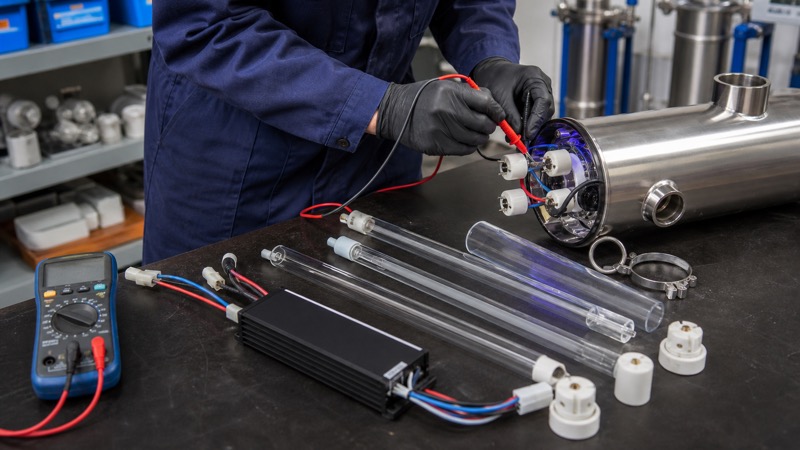
Quick Answer: What Should Buyers Check First?
Start with the basic fault symptom: no light, flicker, short running time, alarm signal or low UV output. Then check lamp age, lamp model, ballast compatibility, connector condition, base and pin layout, quartz sleeve cleanliness, installation environment and equipment safety switches. For replacement orders, buyers should send lamp photos, ballast label photos, equipment model information and key dimensions before confirming a new UVC lamp.
| Symptom | Likely Cause | Buyer Action |
|---|---|---|
| No light | Aged lamp, failed ballast, loose wire or safety switch | Check lamp hours, ballast label, wiring and interlock status. |
| Flicker | Ballast mismatch, poor connector contact or unstable power | Confirm electrical data and connector condition. |
| Low output | Aged lamp, dirty quartz sleeve or wrong wavelength | Review replacement interval, sleeve condition and lamp type. |
| Alarm after replacement | Incorrect lamp model, base type or sensor compatibility | Compare original lamp, new lamp and equipment requirements. |
1. Confirm the Lamp Is the Correct Type
A replacement lamp should not be selected only by visual appearance. Two lamps may look similar but have different wattage, arc length, base type, pin layout, wavelength or electrical current. These differences can cause no start, flicker, low output or equipment alarms.
Buyers can use BIOSUN UV germicidal lamp tubes as the starting product category for standard UVC lamp matching. For existing systems, compare the original lamp with BIOSUN replacement UVC lamps and provide photos of both ends of the lamp.
2. Check Lamp Age and Replacement Interval
UV lamps can still show visible light after their germicidal output has declined. This is a common issue in water sterilizers and air disinfection systems. If the lamp has exceeded its rated service life, visible light is not enough evidence that sterilization performance remains acceptable.
Maintenance buyers should record installation date, operating hours and replacement history. BIOSUN’s UV lamp lifespan and replacement interval guide explains why scheduled replacement is more reliable than waiting for complete lamp failure.
3. Inspect the UV Electronic Ballast
If the lamp does not start or flickers after installation, the ballast should be checked before assuming the lamp is defective. Ballast output current, lamp wattage, input voltage and wiring method must match the lamp. A similar-looking ballast may not be suitable for a different lamp model.
Buyers should send a clear photo of the ballast label and wiring terminals when requesting support. BIOSUN UV electronic ballasts can be matched with compatible lamp types for replacement or OEM projects.
4. Review Base Type, Pin Layout and Connector Contact
Loose contact, wrong pin spacing or an incompatible base can cause intermittent operation. This is especially common when buyers replace lamps across different brands or use a lamp that was selected only by length and wattage.
Check pin count, pin diameter, pin spacing, base material, cap shape and wire direction. BIOSUN’s guide to UV lamp base types and pin layout matching is useful when the original lamp model is unclear. Related UV lamp accessories such as holders, caps and connectors should also be inspected.
5. Clean or Replace the Quartz Sleeve
In UV water sterilizers, a dirty quartz sleeve can reduce UV transmission even when the lamp is working normally. Scale, iron, organic film or fingerprints may block UVC energy from reaching the water. This can create low disinfection performance without an obvious electrical fault.
Buyers should inspect sleeve clarity, sealing condition and lamp clearance. BIOSUN quartz sleeves can be matched by length, diameter, wall thickness and end structure. For maintenance planning, review the article on quartz sleeve cleaning in UV water treatment.
6. Check Wavelength and Ozone Requirement
Some replacement mistakes happen because the buyer ordered an ozone-generating lamp where an ozone-free lamp was required, or selected an ozone-free lamp for an application that was designed around oxidation. The wrong wavelength choice can affect performance, safety and equipment compatibility.
For indoor air disinfection, appliance modules and most occupied-building applications, ozone-free 254 nm lamps are usually the starting point. BIOSUN’s ozone-free vs ozone-generating UVC lamp guide explains how to confirm this requirement before sampling.
7. Consider Equipment Sensors and Alarm Logic
Some UV systems include lamp monitoring circuits, hour counters, safety switches or UV intensity sensors. After replacement, an alarm may remain active if the sensor is dirty, the counter needs resetting, the lamp signal is not compatible, or the wiring is connected incorrectly.
For OEM systems, the lamp, ballast, sensor and control board should be reviewed as one system. If the replacement is for an existing customer unit, buyers should send the equipment model, alarm description and photos of the lamp chamber.
8. Prepare a Complete Troubleshooting Inquiry
A complete inquiry reduces repeated emails and wrong sample orders. Instead of sending only a symptom description, buyers should collect the original lamp model, lamp photos, ballast label, equipment photos, connector details, installation environment and failure history.
For structured technical confirmation, use the BIOSUN UV lamp specification sheet checklist. If a new sample is needed, follow the UV lamp sample approval guide before placing batch orders.
Troubleshooting Checklist for Buyers
- Record the fault symptom: no light, flicker, alarm or low output
- Check lamp operating hours and replacement history
- Confirm lamp wattage, length, base type, pin layout and wavelength
- Send ballast label photos and wiring photos
- Inspect holders, caps, connectors and cable condition
- Check quartz sleeve clarity and sealing condition
- Review power supply, safety switch and alarm reset requirements
- Send equipment model, chamber photos and target application
Common Questions About UV Lamp Troubleshooting
Does visible blue light mean the UV lamp is still effective?
No. Visible light does not prove that germicidal UVC output is still sufficient. Lamps should be replaced according to rated life, measured intensity or equipment maintenance rules.
Should I replace the ballast when replacing the lamp?
Not always. If the ballast is compatible and operating normally, it may continue to be used. If the lamp flickers, does not start or fails early, ballast matching should be checked.
Can a dirty quartz sleeve cause poor sterilization?
Yes. A fouled quartz sleeve can block UVC transmission even when the lamp and ballast are working. Water treatment systems should include sleeve cleaning or replacement in the maintenance plan.
Summary
UV lamp troubleshooting should follow a clear sequence: identify the symptom, confirm lamp model, check service life, inspect ballast and connectors, review quartz sleeve condition, verify wavelength and consider equipment alarm logic. This approach helps buyers order the correct replacement lamp, ballast, sleeve or accessory instead of replacing parts by guesswork.
For technical matching support, send lamp photos, ballast labels, equipment model information and failure symptoms through the BIOSUN inquiry page. BIOSUN can help identify compatible UV lamps, ballasts, quartz sleeves and accessories for water, air and OEM disinfection systems.
Need a UV lamp quotation?
Send your model list to Baiousen and we will review the lamp matching details by email.
Send Inquiry