7 月 31, 2026
UV Lamp Specification Sheet Checklist for B2B Buyers
A practical checklist for reading and preparing UV lamp specification sheets, covering wavelength, wattage, lamp length, base type, ballast matching, quartz sleeve fit and sample approval.
A clear UV lamp specification sheet helps buyers avoid wrong samples, unstable start-up, short lamp life and installation problems. For replacement UVC lamps, OEM appliance projects, water sterilizers and air disinfection equipment, the sheet should define more than a model number. It should record the optical, electrical, mechanical and application details that make the lamp work correctly in the real system.
This checklist is written for overseas B2B buyers preparing inquiries, comparing supplier quotations or approving a new UV lamp sample with a factory.
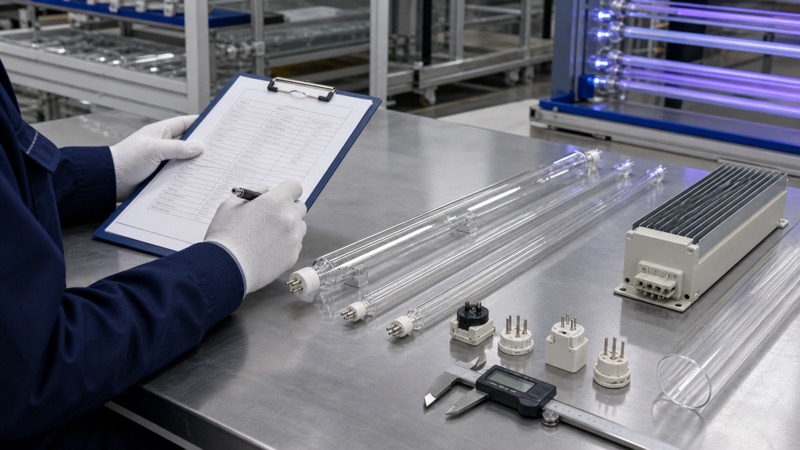
Quick Answer: What Should Be Included in a UV Lamp Specification Sheet?
A practical UV lamp specification sheet should include lamp type, wavelength, ozone requirement, wattage, current, voltage, arc length, total length, tube diameter, base type, pin layout, wire leads, ballast or driver matching, quartz sleeve fit, operating environment, marking, packaging and sample approval requirements. The more complete the sheet is, the easier it is to quote, sample and repeat future orders accurately.
| Specification Area | Buyer Should Confirm | Why It Matters |
|---|---|---|
| Optical | 254 nm, 185/254 nm or other wavelength | Affects disinfection target, ozone control and safety design. |
| Electrical | Wattage, current, voltage and ballast model | Incorrect matching can cause no start, flicker or early failure. |
| Mechanical | Length, diameter, base, pin distance and connectors | Small differences may stop the lamp fitting the equipment. |
| Application | Water, air, surface, appliance or OEM module use | Installation environment affects lamp structure and accessories. |
| Approval | Sample test items, marking, packaging and batch tolerance | Creates a repeatable standard for later production orders. |
1. Start With Lamp Type and Application
The first line of a specification sheet should identify what kind of lamp the buyer needs. A standard low-pressure UV lamp, amalgam UV lamp, cold cathode UV lamp or customized OEM lamp may look similar in a photo, but the operating condition and matching parts can be very different.
Buyers can use BIOSUN UV germicidal lamp tubes as a starting point for straight UVC lamp structures and general water, air or surface sterilization applications. For high-output water treatment, the specification may need to compare standard lamps with amalgam UV lamp selection requirements.
2. Define Wavelength and Ozone Requirement
Most germicidal UVC replacement lamps are specified around 254 nm. Some special oxidation, odor control or photochemical applications may require ozone-generating 185/254 nm lamps. This decision should be written clearly because it affects quartz material, safety instructions and the final equipment design.
If the project is for indoor air treatment, household appliances or occupied-area equipment, ozone-free selection is often required. Buyers comparing both options can review BIOSUN guidance on ozone-free vs ozone-generating UVC lamps before approving samples.
3. Record Wattage, Current, Voltage and Ballast Matching
Electrical data should not be copied from a similar-looking lamp unless the buyer is sure the old lamp and ballast are correct. The specification sheet should record rated wattage, lamp current, voltage range, operating frequency if relevant, and whether the lamp will use an existing ballast, a new ballast or an integrated OEM driver.
When a buyer sends an inquiry, photos of the original ballast label, wiring diagram and lamp base are useful. BIOSUN can compare the lamp with UV electronic ballasts and help identify whether the current driver is suitable for the requested lamp.
4. Measure Total Length, Arc Length and Tube Diameter
Mechanical measurements are one of the most common causes of wrong UVC lamp samples. Total length, glass tube diameter and arc length should be measured carefully. For replacement lamps, buyers should measure from end to end, note whether pins are included in the total length, and send a photo with a ruler or caliper whenever possible.
For OEM projects, the available installation space should also be provided. If the lamp is installed inside a reactor, chamber, duct or appliance module, clearance and holder position may be as important as the lamp length itself.
5. Confirm Base Type, Pin Layout and Connector Direction
A UV lamp can have the correct wattage and length but still fail to fit if the base or pin layout is different. Specification sheets should include base type, pin count, pin diameter, pin spacing, pin orientation, cap material and any wire lead or connector requirement.
For replacement projects, buyers should compare the original lamp with BIOSUN’s guide to UV lamp base types and pin layout matching. For customized assembly work, also check UV lamp accessories such as holders, caps, connectors and wire leads.
6. Check Quartz Sleeve and Reactor Fit
In water sterilization systems, the lamp usually works inside a quartz sleeve. The sleeve protects the lamp from water while allowing UVC transmission. If the lamp is too long, too wide or positioned incorrectly, it may touch the sleeve, reduce service access or cause maintenance problems.
The specification sheet should record quartz sleeve outer diameter, inner diameter, length, end opening, sealing design and clearance around the lamp. Buyers working on water systems can compare the lamp dimensions with BIOSUN quartz sleeves before confirming batch orders.
7. Add Operating Environment and Maintenance Conditions
The same lamp may perform differently in water reactors, HVAC ducts, surface sterilization boxes or compact appliance modules. A useful specification sheet should mention operating temperature, humidity, ventilation, duty cycle, start-stop frequency and expected service interval.
Maintenance distributors should also record whether the customer replaces only the lamp or replaces the lamp together with sleeve, O-rings, holder, ballast or connector parts. This helps prevent repeat service calls and keeps future orders consistent.
8. Include Marking, Packaging and Traceability
For international buyers, lamp marking and packaging should be confirmed before batch production. Marking may include model number, wattage, wavelength, brand or private label, production date and warning information. Packaging should protect the glass tube during export shipping and warehouse handling.
If the buyer already has destination market requirements, carton label rules or private-label artwork, these should be sent before sample approval. This prevents a technically correct lamp from being delayed later because the marking or packaging does not match the purchasing standard.
9. Use Sample Approval to Lock the Final Specification
A specification sheet becomes most useful when it is connected to a tested sample. After the sample arrives, buyers should check dimensions, base fit, start-up behavior, operating stability, installation clearance, lamp marking and packaging. Any accepted adjustment should be added back into the specification sheet before batch production.
For a structured process, buyers can follow the BIOSUN UV lamp sample approval guide. A signed or confirmed sample record is especially important for OEM, ODM and replacement model projects that will repeat over multiple orders.
Buyer Checklist Before Sending a UV Lamp Inquiry
- Application: water, air, surface, HVAC, appliance or OEM module
- Existing lamp model, photos and equipment brand if available
- Wavelength requirement: ozone-free 254 nm or ozone-generating 185/254 nm
- Rated wattage, current, voltage and ballast or driver details
- Total lamp length, arc length and tube diameter
- Base type, pin layout, wire lead length and connector direction
- Quartz sleeve size, reactor drawing or installation space
- Marking, private label, packaging and destination country
- Sample quantity, target batch quantity and expected delivery schedule
Common Questions About UV Lamp Specification Sheets
Can I order only by the old lamp model number?
Sometimes yes, but it is safer to send photos and key measurements. Old model numbers may have different supplier versions, and equipment manufacturers may change bases or ballasts over time.
Which detail is most important for replacement UVC lamps?
Length, wattage, base type, pin layout and ballast matching are usually the first checks. For water systems, quartz sleeve fit and sealing clearance should also be confirmed.
Do OEM UV lamp projects need a different specification sheet?
Yes. OEM projects should include installation drawings, wire routing, connector position, label rules, packaging and sample approval standards, not only lamp electrical data.
Summary
A complete UV lamp specification sheet reduces sampling mistakes and makes repeat purchasing easier. Buyers should define wavelength, electrical matching, dimensions, base type, accessory fit, quartz sleeve clearance, operating environment, marking, packaging and sample approval before confirming production.
For replacement or OEM support, compare BIOSUN replacement UVC lamps or send your lamp photos, drawings and project requirements through the BIOSUN inquiry page. BIOSUN can help prepare a practical specification for UV germicidal lamps, quartz sleeves, ballasts and related accessories.
Need a UV lamp quotation?
Send your model list to Baiousen and we will review the lamp matching details by email.
Send Inquiry