7 月 17, 2026
UV Lamp Lifespan and Replacement Interval Guide for Buyers
Plan UV lamp replacement intervals by operating hours, UV output decline, ballast condition, quartz sleeve maintenance and spare part requirements.
UV lamps do not fail only when they stop lighting. In many water, air and surface disinfection systems, the lamp can still emit visible light while germicidal UV-C output has already declined. For B2B buyers, this makes replacement interval planning important for system performance, maintenance cost and customer uptime.
This guide explains how distributors, maintenance companies, facility teams and OEM equipment manufacturers can plan UV lamp replacement intervals, spare parts and inspection records more reliably.
Quick Answer: When Should UV Lamps Be Replaced?
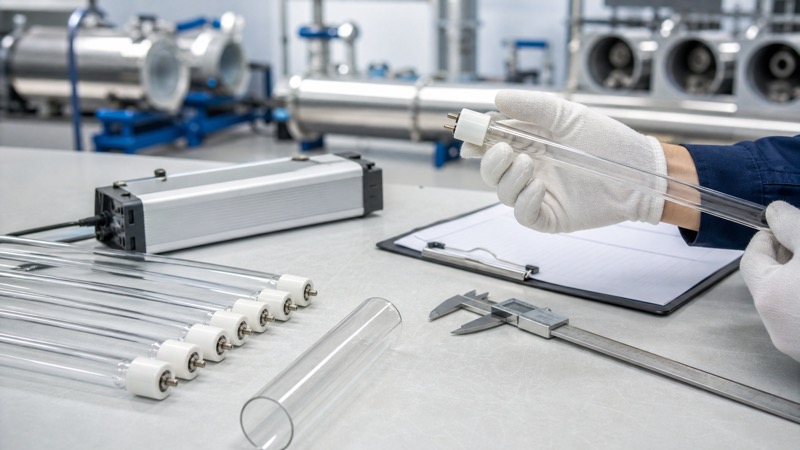
UV lamps should be replaced according to rated lamp life, actual operating hours, application risk, UV output requirements and equipment condition. Many projects use a planned replacement schedule instead of waiting for the lamp to stop lighting. Buyers should also inspect quartz sleeves, ballasts, holders and sealing parts during lamp replacement.
| Replacement Factor | Why It Matters | Buyer Action |
|---|---|---|
| Operating hours | UV-C output declines with use even if visible light remains. | Record installation date and running hours. |
| Application risk | Water, air and healthcare-related systems may need stricter schedules. | Set replacement intervals by system duty and compliance need. |
| Quartz sleeve condition | Scale, cloudiness or cracks can reduce UV transmission. | Clean or replace sleeves during maintenance. |
| Ballast condition | Unstable ballasts can shorten lamp life or cause starting problems. | Check ballast label, wiring and starting behavior. |
1. Visible Light Is Not the Same as Germicidal UV Output
A used UV lamp may still glow, but germicidal UV-C output can decline over time. If buyers judge lamp condition only by visible light, the system may continue running below the intended disinfection performance.
For replacement planning, start with the lamp model, rated life and application. BIOSUN UV germicidal lamp tubes can be matched by wattage, length, base type, wavelength and equipment requirement.
2. Track Operating Hours and Installation Dates
The simplest maintenance record includes lamp model, installation date, operating hours, replacement date, equipment model and technician notes. For commercial systems, keeping this record helps purchasing teams prepare spare lamps before urgent downtime occurs.
Distributors can also use replacement records to forecast customer demand. If a customer maintains multiple UV units, a planned lamp replacement list is more reliable than emergency purchasing after a system alarm or lamp failure.
3. Water Systems Need Quartz Sleeve Inspection
In UV water sterilizers, the lamp usually sits inside a quartz sleeve. Even a new lamp will perform poorly if the sleeve is scaled, cloudy, scratched or cracked. Buyers should inspect the sleeve whenever they replace the lamp.
For water treatment maintenance, compare lamp dimensions with quartz sleeves and sealing parts. O-rings, caps and sleeve nuts may also need replacement if they are aged or damaged.
4. Ballast Health Affects Lamp Life
The ballast controls lamp starting and operation. A weak, mismatched or unstable ballast can cause flickering, delayed ignition, reduced output or shortened lamp life. If lamps fail earlier than expected, check the ballast before replacing lamp tubes repeatedly.
Buyers should send the label and wiring photos of the UV electronic ballast when asking for technical support. For OEM projects, lamp and ballast matching should be confirmed together before sample approval.
5. Replacement Intervals Depend on Application
Replacement planning is not identical for every UV system. Water sterilizers may follow operating-hour schedules and water quality conditions. Air disinfection modules may depend on airflow, dust load, access frequency and safety design. Surface treatment equipment may need closer performance checks if process quality depends on UV intensity.
For air-related and appliance projects, review the equipment structure and target use case through BIOSUN UV lamp application solutions. The correct replacement plan should support the actual use environment, not only the lamp datasheet.
6. Stock Spare Lamps and Accessories Together
Maintenance buyers should avoid ordering only lamp tubes if the system also needs caps, holders, O-rings, connectors or quartz sleeves. Small accessories can delay installation even when the main lamp is already available.
BIOSUN supplies related UV lamp accessories for replacement and OEM projects. For recurring maintenance, prepare lamp kits by equipment model so the service team receives the correct parts together.
7. Replacement Buyers Should Reconfirm Model Matching
Before reordering, confirm that the lamp base type, pin layout, length, tube diameter and ballast are still correct. Older equipment may have multiple revisions, and similar lamps may not be interchangeable.
For more detail, review BIOSUN guides on UV lamp replacement model matching and UV lamp base types and pin layout matching. These checks reduce the risk of receiving lamps that are close but not installable.
8. Buyer Checklist for UV Lamp Replacement Planning
- Lamp model, wattage, wavelength and base type
- Installation date and estimated operating hours
- Equipment model and quantity of lamps per unit
- Ballast label, wiring photos and starting behavior
- Quartz sleeve condition and O-ring status for water systems
- Holder, cap, connector and wire lead condition
- Spare quantity, packing requirement and destination country
- Whether the order is for routine maintenance, emergency replacement or distributor stock
Common Questions About UV Lamp Lifespan
Should UV lamps be replaced if they still light up?
Often yes, if they have reached the planned replacement interval or rated operating hours. Visible light does not prove that germicidal UV-C output is still sufficient.
Why do some lamps fail earlier than expected?
Possible causes include ballast mismatch, frequent switching, overheating, poor electrical contact, installation stress, water leakage, vibration or unsuitable operating conditions.
Can BIOSUN help build a replacement list?
Yes. Buyers can send lamp photos, equipment models, ballast labels and quantity requirements. BIOSUN can help match lamps, sleeves and accessories for maintenance planning.
Summary
UV lamp lifespan planning should be based on operating hours, rated lamp life, application risk, ballast condition, quartz sleeve transmission and accessory status. Waiting until a lamp stops lighting is not a reliable maintenance strategy for disinfection systems.
For replacement planning support, review BIOSUN replacement UVC lamps or send your lamp photos and equipment list through the BIOSUN inquiry page. The team can help prepare matching lamps, quartz sleeves, ballasts and accessories for routine maintenance or distributor stock.
Need a UV lamp quotation?
Send your model list to Baiousen and we will review the lamp matching details by email.
Send Inquiry