7 月 24, 2026
UV Lamp Sample Approval Guide for OEM and Replacement Buyers
A practical UV lamp sample approval checklist covering dimensions, wavelength, ballast matching, quartz sleeve fit, accessories, packaging and production records.
UV lamp sample approval is a key step before OEM production, distributor stocking or replacement program rollout. A sample should not be approved only because it lights up. Buyers need to confirm dimensions, base type, wavelength, ballast matching, packaging, labeling and installation fit before moving to batch orders.
This guide is written for overseas B2B buyers, appliance brands, air purification equipment manufacturers, water sterilizer builders and maintenance distributors that need a practical sample approval process for UV germicidal lamps and related components.
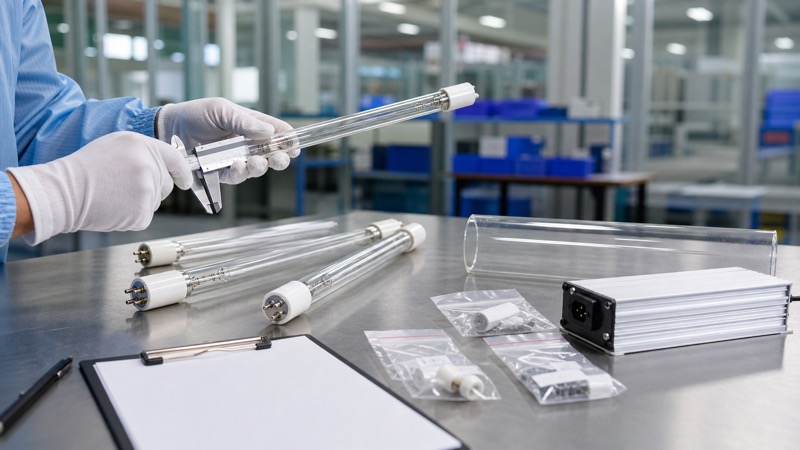
Quick Answer: What Should Buyers Check Before Approving UV Lamp Samples?
Before approving a UV lamp sample, buyers should check lamp length, tube diameter, base type, pin layout, wattage, wavelength, ballast compatibility, quartz sleeve fit, holder fit, wire or connector details, packaging strength and final model marking. For OEM projects, approval should include both technical fit and production documentation.
| Approval Item | Why It Matters | Buyer Check |
|---|---|---|
| Mechanical dimensions | The lamp must fit the equipment structure and holder position. | Measure length, diameter, base and installation space. |
| Electrical matching | Wrong ballast matching can cause flicker, failed starting or shorter lamp life. | Confirm wattage, ballast label, wiring and starting behavior. |
| Application fit | Water, air, surface and appliance systems need different lamp choices. | Review wavelength, structure, shielding and maintenance access. |
| Packing and marking | Correct labels and protection reduce receiving and installation errors. | Approve model marking, carton plan and fragile-part protection. |
1. Start With the Application and Equipment Drawing
A sample approval process should start from the real equipment application. Water sterilizers, air disinfection units, HVAC modules, appliance systems and surface treatment equipment all have different lamp requirements. The sample must fit the installation structure and support the treatment goal.
For new projects, buyers should send drawings, installation photos or available space before sampling. BIOSUN can review the project against UV lamp application solutions and recommend whether a standard or customized lamp direction is more suitable.
2. Measure Lamp Length, Diameter and Base Details
Mechanical matching is the first physical approval step. Buyers should measure total lamp length, tube diameter, base length, pin layout and holder position. Similar-looking lamps may not fit the same equipment if the base or pin spacing is different.
Buyers can compare sample lamps with BIOSUN UV germicidal lamp tubes or use an old lamp sample as a reference. For replacement-oriented projects, close-up photos of both lamp ends are more useful than general product photos.
3. Confirm Wavelength and Ozone Requirement
UV lamp samples should match the required wavelength before batch production. Many germicidal systems use 254 nm ozone-free lamps, while some special odor or oxidation systems use ozone-generating 185/254 nm lamps. The wrong lamp type can create application and safety problems.
For more detail, buyers can review the BIOSUN guide on ozone-free vs ozone-generating UVC lamps. This decision should be confirmed before sample approval, not after production starts.
4. Test the Lamp With the Correct Ballast
A UV lamp sample should be tested with the intended ballast or a confirmed equivalent. If the ballast output does not match the lamp, the sample may fail to start, flicker, run hot or have unstable output.
For OEM projects, confirm the lamp and UV electronic ballast as one system. Buyers should record ballast model, input voltage, wiring method, number of lamps driven and any starting observations during sample testing.
5. Check Quartz Sleeve and Sealing Fit for Water Systems
For UV water sterilizers, the lamp must fit inside the quartz sleeve and reactor structure. A sample can pass electrical testing but still fail installation if the sleeve length, internal clearance or sealing position is wrong.
Water-system buyers should check the lamp together with quartz sleeves, O-rings, caps and sleeve nuts. If the old sleeve is damaged or cloudy, approving the lamp alone may not solve the maintenance problem.
6. Review Holders, Caps, Connectors and Wiring
Small accessories can block sample approval if they are not checked early. Lamp holders, caps, connectors, O-rings and wire leads affect installation speed, service access and long-term reliability.
For maintenance or equipment kits, include UV lamp accessories in the sample approval package. Buyers can also review the guide on UV lamp holders, caps and connectors matching before confirming accessory samples.
7. Approve Marking, Packaging and Receiving Requirements
For repeat orders, model marking and packaging approval are as important as the sample lamp itself. Clear model marking helps warehouse teams, maintenance technicians and distributors avoid confusion. Protective packaging reduces damage during export shipping.
For fragile glass components, buyers should confirm foam support, base protection, carton strength and mixed-goods separation. The BIOSUN article on UV lamp packaging and shipping explains how to reduce breakage risk for international orders.
8. Keep a Sample Approval Record
A practical sample approval record should include sample date, drawing version, lamp model, measured dimensions, wavelength, wattage, ballast model, accessory list, packaging notes and final approval result. This record helps prevent future production drift and ordering mistakes.
Buyers can also request company and product documentation when needed. BIOSUN company qualification materials can be reviewed from the certificate page, while project communication and quotation details can be handled through the BIOSUN inquiry page.
Buyer Checklist Before Approving UV Lamp Samples
- Application, equipment photos and drawing version
- Total lamp length, tube diameter and base details
- Pin layout, holder fit, cap and connector requirements
- Wavelength requirement: ozone-free 254 nm or ozone-generating 185/254 nm
- Wattage, ballast label, voltage and wiring method
- Quartz sleeve and O-ring fit for water systems
- Sample packaging, model marking and carton requirement
- Expected order quantity, destination country and production timeline
Common Questions About UV Lamp Sample Approval
Can buyers approve a sample only after checking that it lights up?
No. Lighting up is only one check. Buyers should also confirm dimensions, wavelength, ballast matching, base type, installation fit, packaging and marking.
Should OEM buyers approve the lamp and ballast separately?
The lamp and ballast should be reviewed together. Separate approval can miss electrical matching problems that appear during real equipment operation.
What if the sample needs a small change?
Record the change clearly, including drawing version, dimension change, base change or wiring change. A revised sample may be needed before batch production.
Summary
UV lamp sample approval should confirm mechanical fit, wavelength, ballast matching, accessory compatibility, packaging and documentation before batch production. A structured approval record reduces sourcing risk and helps repeat orders stay consistent.
For OEM or replacement sample support, review BIOSUN replacement UVC lamps or send drawings, lamp photos and equipment details through the BIOSUN inquiry page. BIOSUN can help confirm UV lamp, ballast, quartz sleeve and accessory combinations before production.
Need a UV lamp quotation?
Send your model list to Baiousen and we will review the lamp matching details by email.
Send Inquiry